

As the morning light shifts and we welcome the first signs of spring, our focus naturally turns to the transition of our homes. For the mindful investor, the seasonal changeover is more than a simple chore; it is a ritual of preservation. Moving your heavy winter textiles into hibernation requires a strategic approach to ensure that your best outfits are protected and ready to emerge in perfect condition when the temperatures eventually drop again.
Effective closet organization during this time is essential for the longevity of your investments. By treating your winter staples - from heavy cashmere knits to tailored wool coats - with the respect they deserve, you maintain the longevity of your most cherished pieces. This guide explores how to navigate the transition with intention, focusing on the protection and restoration of your winter collection.
The Best Way to Store Winter Clothes
A well-maintained wardrobe functions as a curated archive. High-quality winter items require a legacy of care to survive the months they spend out of rotation. When we think about closet organization, we often focus on the visual arrangement, but true luxury care is about the environment we create for our fabrics.
-
Assess and Curate with Purpose: Begin your seasonal changeover by evaluating each winter piece. Use this time to learn how to declutter with intention—keep only what serves your style and warrants the cost of preservation. Overcrowding is the enemy of garment health, as it leads to crushed fibers and restricted airflow.
-
Prioritize Material Integrity: Winter wardrobes are often built on natural fibers like wool, alpaca, silk, and cashmere. These organic, protein-based materials are exceptionally delicate and require specific environmental conditions to remain supple.
-
Acknowledge the Threats: During the spring and summer, stagnant air, humidity, and moths become the primary threats to your winter collection. Your storage system must provide a proactive, breathable defense to ensure you have fresh clothes waiting for you in the autumn.

Storing Winter Clothes: Step-by-Step
To effectively organize clothes for the off-season, follow this meticulous five-step transition guide. This process ensures that your winter items return as fresh clothes next year, free from the degradation that often occurs in improper storage.
1. The Deep Clean: A Non-Negotiable Step
Never store a winter garment that hasn’t been cleaned. Even if a coat looks spotless to the naked eye, invisible traces of body oils, perfume, or food can oxidize over time. This leads to permanent yellowing or "caramelization" of stains. Furthermore, these organic residues are the primary attractants for clothes moths. Ensure every item is professionally cleaned or carefully laundered and completely dry before it enters your storage system.
2. Inspect for Repair and Maintenance
Before an item enters its period of rest, inspect it for any necessary repair. Are there loose threads on your favorite cardigan? Does your wool coat have a missing button or a snagged lining? Addressing these small needs now prevents them from becoming larger issues later and ensures your wardrobe is ready the moment winter returns. A well-maintained garment is a garment that lasts a lifetime.

3. Choose Breathable Storage
The most common mistake in seasonal storage is the use of plastic bins, vacuum-seal bags, or dry-cleaner plastic. Plastic traps moisture and off-gasses chemicals, which can lead to fiber deterioration and a persistent musty scent.
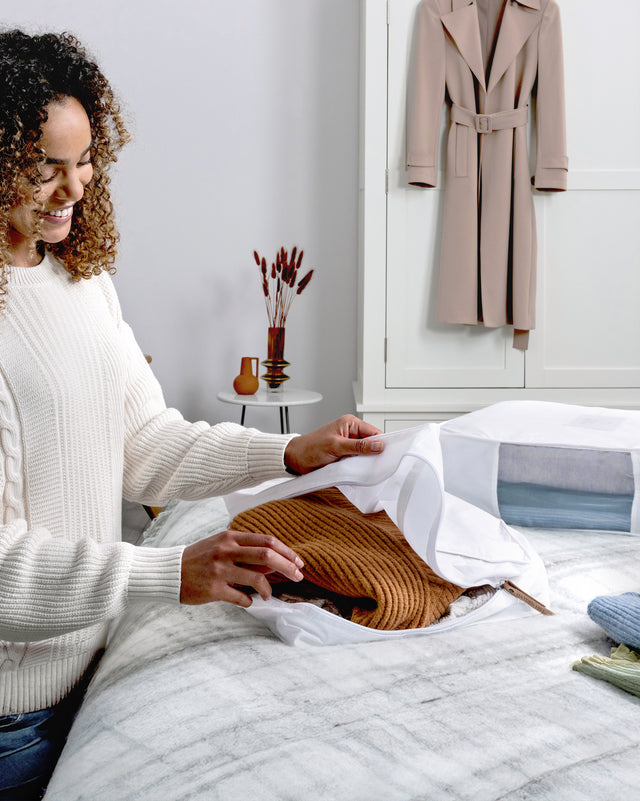
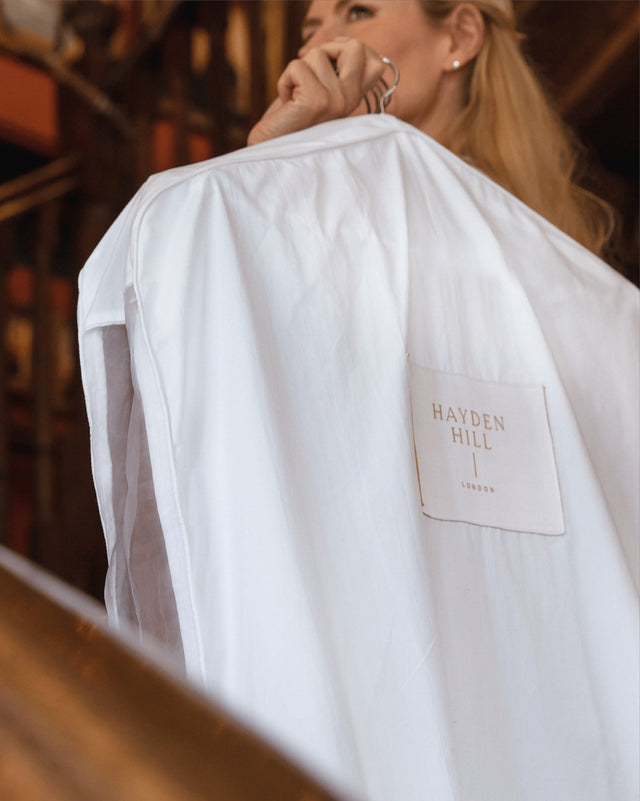
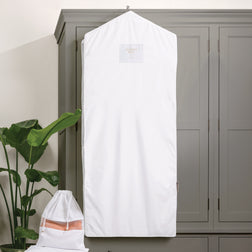
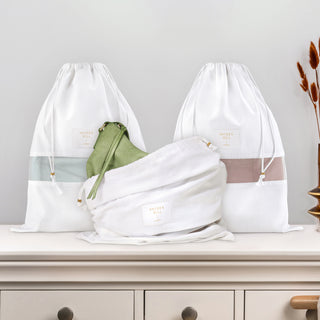
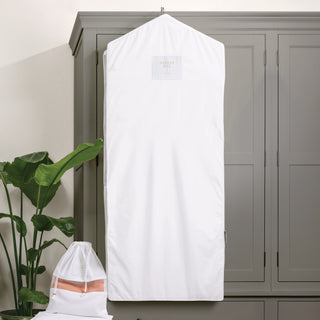
Instead, utilize breathable 100% organic cotton garment bags. Cotton allows for essential air circulation, preventing the yellowing of light fabrics and maintaining the "breath" of natural fibers. This ensures that the natural oils in wool and cashmere do not dry out, keeping the texture soft and luxurious.
4. Protect Against the "Closet Crush"
In the quest for better closet organization, we often try to save space by packing items too tightly. However, when winter coats and suits are overcrowded, the fibers are crushed, leading to permanent creasing. Use wide, contoured wooden hangers to maintain the shoulder structure of tailored pieces. For knits, fold them loosely with acid-free tissue paper and place them in breathable cotton storage boxes rather than hanging them, which can cause them to stretch.
5. Strategic Placement and Environment
Store your preserved winter collection in a cool, dry, and dark environment. Light exposure is a silent destroyer, causing delicate dyes to fade and fibers to weaken. Humidity is equally dangerous, as it can encourage mildew and mold growth. A well-organized, climate-controlled space is the final component of a successful seasonal changeover. Avoid attics or basements where temperature fluctuations are extreme.
The Science of Long-Term Preservation

Why is the choice of material so critical when you organize clothes for the long term? The science of textile conservation tells us that the micro-environment within a storage bag directly impacts the textile's lifespan.
-
Airflow Prevents Fiber Fatigue: Breathable organic cotton prevents the buildup of stagnant air. This is particularly important for heavy wools, which can become brittle if they cannot interact with the ambient environment. Natural fibers are resilient only when they can "breathe."
-
Moth Prevention Without Chemicals: High-quality cotton storage with a secure, high-quality zipper provides a physical barrier against pests. This allows you to protect your best outfits without relying on harsh-smelling mothballs or chemicals. A physical seal is the most effective way to ensure your fresh clothes remain untouched by larvae.
-
Sustainability and Mindful Ownership: Choosing organic cotton storage isn't just a win for your wardrobe; it's a win for the planet. By avoiding synthetic plastics and opting for long-lasting, sustainable materials, you align your garment care with a more thoughtful lifestyle.
How to Declutter Your Winter Archive
The seasonal changeover is the perfect time for a wardrobe audit. When deciding how to declutter your winter items, ask yourself if the item is worth the space it occupies.
-
The Joy of Fit: If a winter coat no longer fits comfortably, it is taking up valuable real estate that could be used to give your other best outfits more room to breathe.
-
The Repair Threshold: If an item needs a repair that costs more than the item's value or your emotional attachment to it, it may be time to let it go.
-
The Quality Test: Look for pilling, thinning elbows, or faded colors. If a garment is beyond restoration, it should be responsibly recycled.

By decluttering now, you ensure that your wardrobe only contains items that are beautiful, functional, and ready to wear.
Redefining Your Relationship with Your Wardrobe
The act of storing your winter wardrobe is an intentional investment in the future. It is a shift from "consumption" to "curation." By choosing refined, sustainable systems during your seasonal changeover, you are creating a legacy of care that allows your most beautiful pieces to be enjoyed for years to come.
Thoughtful wardrobe care is about the peace of mind that comes from knowing your cherished winter collection is resting safely in breathable, protective care.
Hayden Hill provides the functional and elegant solutions necessary to maintain the beauty of your winter collection. From our hand-crafted organic cotton bags to our thoughtful design details, we are here to help you protect what you love. By following these steps, you ensure that when the first frost of next year arrives, your winter wardrobe will be as vibrant and luxurious as ever.