

Some clothes simply matter more than others. They are the pieces you reach for again and again, the ones that feel familiar, flattering, or quietly tied to a moment in time. A cashmere sweater that always feels right. A leather jacket that improves with age. A dress saved for evenings that call for something special.
As Valentine’s Day approaches and wardrobes shift toward thoughtful dressing, caring for clothes becomes part of how we look after the things we value most. It is not about perfection or rigid rules, but about intention, attention, and building habits that help garments last.
As wardrobes become more considered, caring for clothes has become part of a broader shift toward quality and longevity. Looking after what you already own is one of the simplest ways to protect both your wardrobe and your time, ensuring the pieces you love are always ready to wear when the moment calls for them.
Why Caring for Clothes Matters
Caring for clothes goes far beyond keeping them clean. It is about preserving shape, texture, and character. When garments are washed gently, stored thoughtfully, and handled with care, they retain their original appearance for longer. Over time, this reduces unnecessary replacement and supports a wardrobe that feels curated rather than disposable.
Many of the clothes we value most are made from fine or delicate materials that respond best to a softer approach. Cashmere, wool, silk, and leather all benefit from gentler washing and careful storage. Understanding how to care for these fabrics properly makes a noticeable difference in how they wear and age over time.
Good garment care often starts with a “less is more” approach. Washing clothes less frequently, allowing garments to air between wears, and avoiding unnecessary heat can significantly extend their lifespan. Many items do not need to be washed after every wear, particularly knitwear, outer layers, and structured pieces.
When washing is needed, small protective steps make a meaningful difference. Using mesh laundry bags helps reduce friction and prevent delicate items from stretching or tangling during machine washes. They are especially useful for fine knits, underwear, and garments with straps or detailing, and help keep smaller items separated.
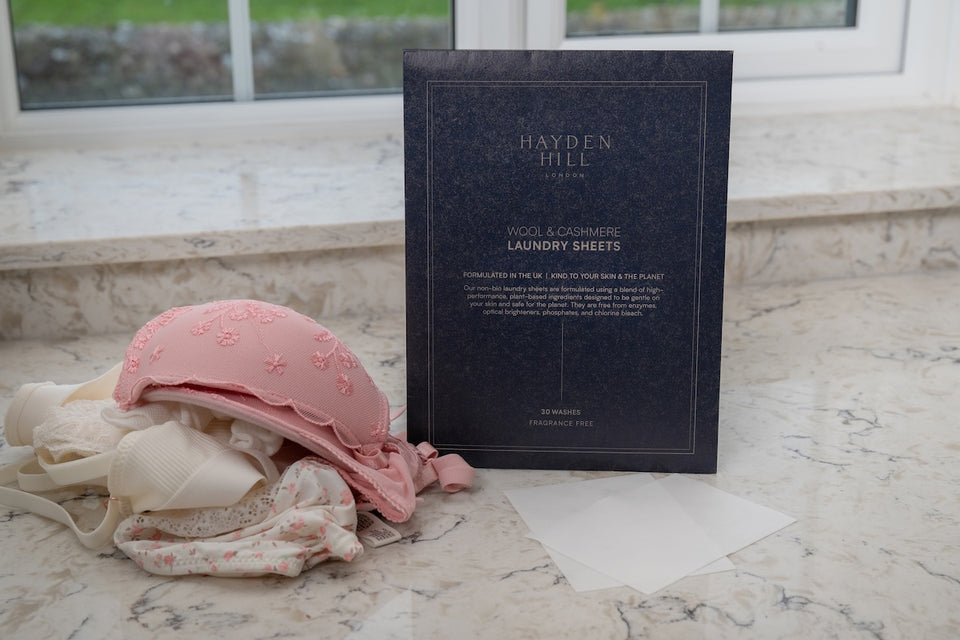
Choosing a gentler detergent also plays an important role. Laundry detergent sheets designed for wool and cashmere offer a more considered way to clean delicate garments. Lightweight and easy to use, they dissolve fully in water and provide effective cleaning without the bulk or harshness of traditional liquids and powders. Suitable for both machine and hand washing, laundry sheets support careful garment care while aligning with a more sustainable, low-waste approach to everyday routines.
Laundry Bags and Care Between Wears
Not all garment care happens in the washing machine. Looking after clothes between washes is just as important, especially for pieces that are worn frequently or packed for travel. Organic cotton laundry bags offer a simple way to separate worn items from clean clothing, helping fabrics stay protected when they are most vulnerable.
When travelling, a dedicated laundry bag helps protect garments from lingering odors, moisture, and creasing inside a suitcase. Breathable natural cotton allows air to circulate, reducing the risk of mustiness while keeping worn pieces contained and organized.

Why Storage Is Part of Clothing Care
Thoughtful garment storage plays a central role in caring for clothes long after they have been washed. How clothing is stored between wears affects not only how it looks and feels, but also how well it is protected over time. Crowded wardrobes, sealed plastic containers, and poor airflow can stress fabrics, encourage creasing, and create conditions that leave garments more vulnerable to damage.
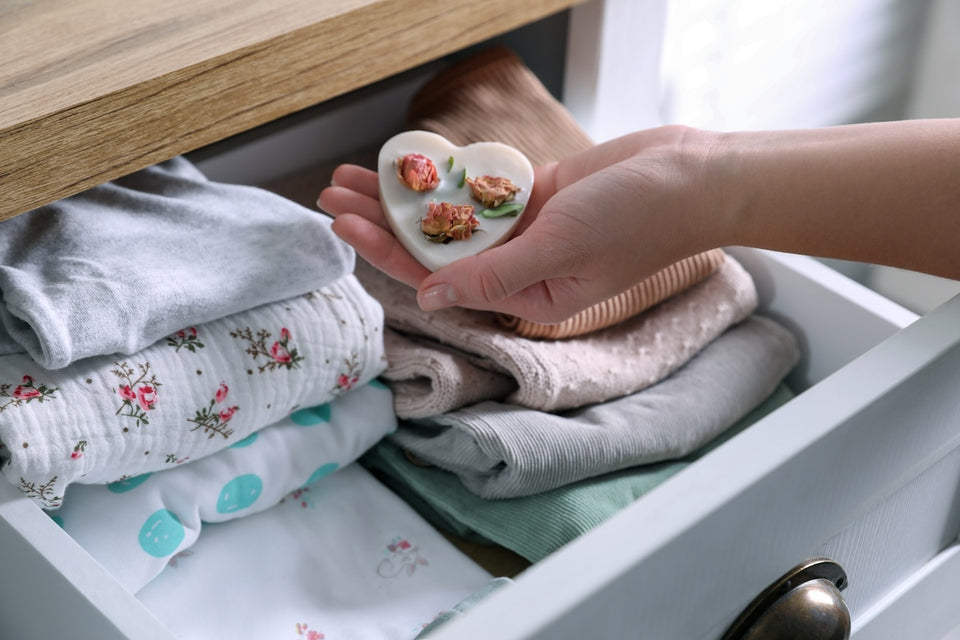
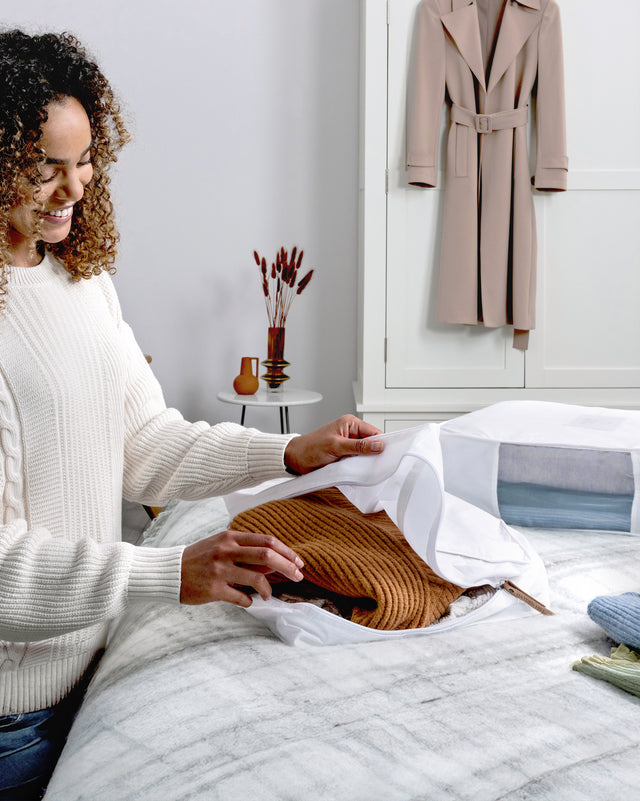
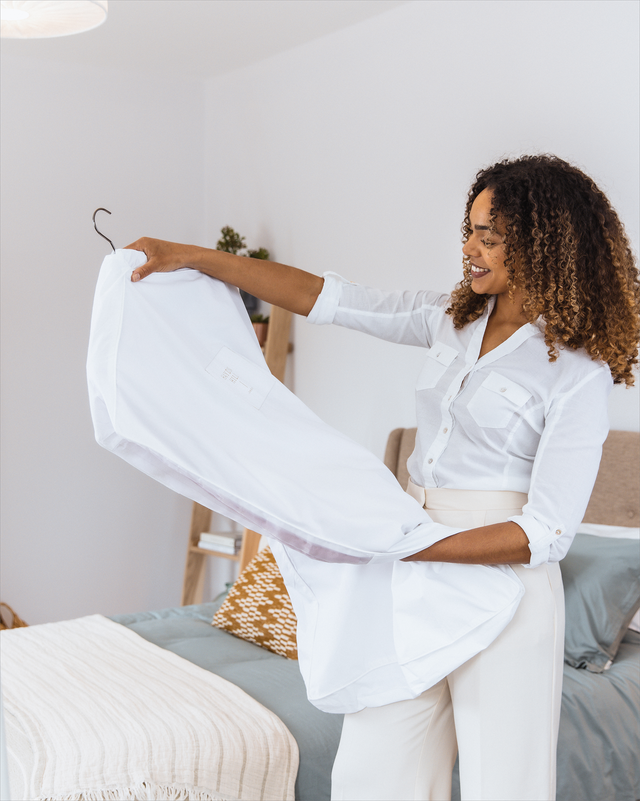
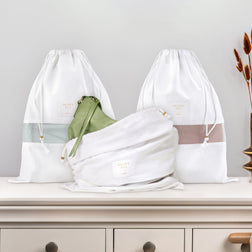
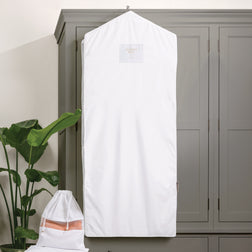
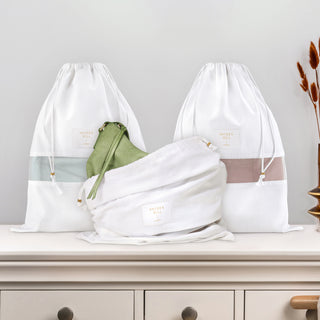
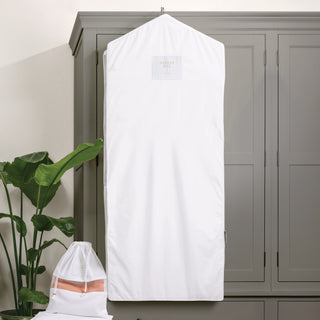
Well-designed garment storage allows clothes to breathe, maintain their shape, and remain visible rather than forgotten. Storage made from natural, breathable materials allows airflow while protecting garments from dust, friction, and unnecessary handling.
Proper storage also plays an important role in moth protection. Clothes moths are drawn to dark, undisturbed spaces where natural fibers are stored tightly together. Using garment storage bags and avoiding overcrowding helps reduce these conditions, making wardrobes less inviting to moths while keeping clothing accessible and well cared for.
Storage becomes especially valuable during seasonal rotation. Items that are not worn daily can be stored and protected without being compressed or forgotten. A small number of well-chosen storage solutions often work better than over-organising with too many containers, helping wardrobes stay calm, functional, and protective.

Caring for the Clothes You Wear Most
The clothes you reach for most often naturally experience the most wear. These everyday favorites benefit from simple habits that protect them without adding complexity. Rotating garments, allowing pieces to rest between wears, and storing them properly helps reduce stress on fabrics and slows visible wear.
Rather than treating clothing as disposable, this approach encourages longevity. When everyday pieces are cared for consistently, they remain comfortable, flattering, and dependable, making your wardrobe feel reliable rather than replaceable.
A Wardrobe Built to Last
Building a wardrobe that lasts is less about perfection and more about consistency. Thoughtful washing, intentional storage, and gentle care between wears all contribute to clothing that holds its shape, texture, and purpose over time.
This mindset shifts focus away from accumulation and toward appreciation. Clothes that are cared for thoughtfully tend to feel better to wear and stay relevant for longer, becoming part of a wardrobe that evolves rather than constantly turns over.
The result is a wardrobe that feels well looked after, protected from unnecessary wear, and supported through years of use, allowing the pieces you love most to remain part of your everyday life.