

November marks a welcome return to substantial layers, tactile textures, and heritage textiles. Tartan and argyle prints have returned to the forefront of fall fashion, appearing across runway collections, curated vintage archives, and seasonal knitwear rotations. These classic Scottish patterns offer visual structure and warmth, yet their intricate constructions present distinct maintenance challenges.
Caring for patterned pieces requires thoughtful routines: from hand washing multi-tone wool without color bleeding to maintaining the clean lines of tailored pleats and safeguarding fine fibers against clothes moths.
Here, we explore practical, material-focused methods to preserve the structure, color clarity, and softness of your tartan and argyle garments for years to come.
Clan Roots and Royal Patronage: Famous Tartans
Tartan and argyle both trace their ancestry to the Scottish Highlands, where woven patterns served as living emblems of kinship, allegiance, and geography. Part of the joy of curating vintage or contemporary tartan is discovering the clan histories stitched into every check:
-
Royal Stewart: Perhaps the most recognizable tartan in existence, with its vivid crimson ground and intersecting forest green, navy, and yellow stripes. Originally the personal tartan of the royal House of Stewart, Queen Victoria embraced it with such devotion at Balmoral Castle that it became a lasting wardrobe staple, favored by high-society tailors and 1970s British punk fashion alike.
-
Black Watch (The Government Sett): Defined by deep navy, bottle green, and midnight black. This pattern originated around 1725 with the Independent Highland Companies, later formalized as the 42nd Royal Highland Regiment, who patrolled the glens. Because it is an open military pattern rather than one bound to a single family line, anyone may wear it without claiming clan lineage.
-
MacLeod of Lewis ("Loud MacLeod"): Bold and unmistakable, this pattern features a vibrant canary-yellow field crossed by jet-black and red lines. Tracing back to the Isle of Lewis, it remains a runway favorite for designers seeking graphic punch.
-
Campbell of Argyll: The dignified, deep-green and azure pattern of Clan Campbell. Argyle knitwear takes its name directly from this region: legend holds that the clan's tartan was turned on a 45-degree angle to create the diagonal diamond lattice we recognize today, later popularized as luxury knitwear in the 1920s by Pringle of Scotland and the Duke of Windsor.

Why Patterned Weaves and Knits Demand Special Care
Multi-colored knits and structural woolen fabrics behave differently from solid, smooth-finished garments.
The Intarsia Join in Argyle
Traditional argyle knitwear utilizes an intarsia knitting technique. Intarsia creates distinct blocks of color without carrying yarns across the back of the fabric, keeping the garment lightweight and flexible. Where two color blocks meet, yarns twist around one another. Friction from machine washing stresses these join points, causing joins to loosen and unravel over time.
The Dynamics of Tartan Wool Weaves
Tartan pieces, such as pleated kilts, trousers, and overcoats, rely on dense twill weaves to hold crisp silhouettes. Wool fibers possess an outer layer of microscopic scales called cuticles. When exposed to heat, water, and mechanical movement simultaneously, these cuticles latch together, producing felting and shrinkage that distort geometric lines.
How to Clean Tartan and Argyle Without Color Bleeding
Natural wool fibers feature an inherent protective coating known as lanolin, which naturally repels surface dust and neutralizes odors. Frequent washing is unnecessary and accelerates fiber degradation.
Between wears, allow wool garments to rest for 24 to 48 hours in a well-ventilated room. Gentle steaming relaxes fibre tension and refreshes garments without immersion.
The Cool Water Immersion Method
When a patterned piece requires laundering, gentle hand washing protects cashmere and merino knits:
-
Test for colorfastness: Dampen a clean cotton swab with cool water and press it against an inconspicuous interior yarn. If no dye transfers, the garment is stable for washing.
-
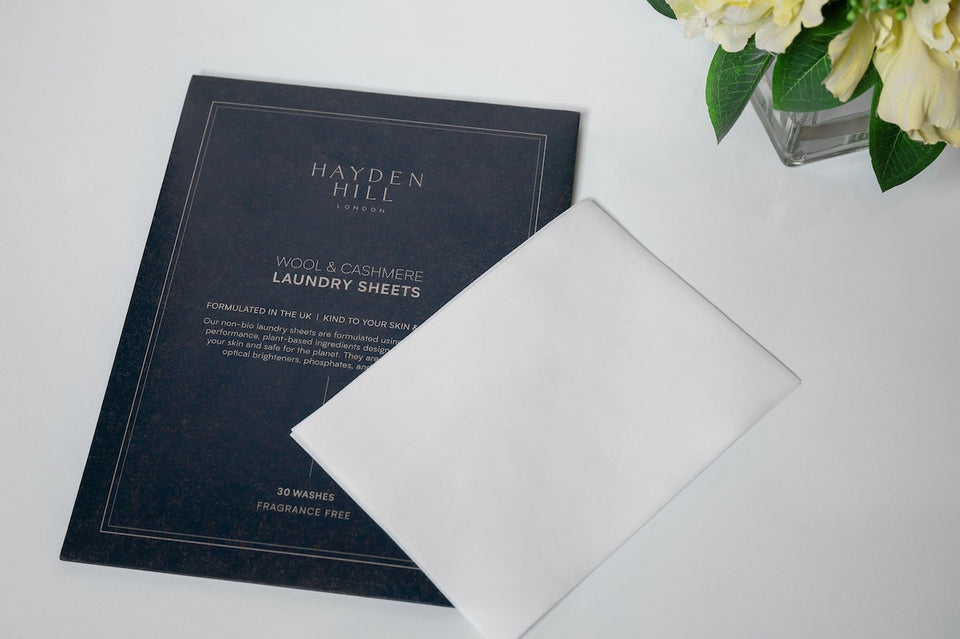
Prepare a cool bath: Fill a clean basin with cold water and dissolve half a Hayden Hill Laundry Sheet into the bath. Traditional detergents often contain enzymes and optical brighteners that strip natural lanolin and loosen dye bonds. Hayden Hill sheets are plant-based, non-bio, and free from enzymes and harsh bleaches, dissolving cleanly in cool water to provide gentle, measured cleansing without residue.
-
Submerge without friction: Submerge the knit into the water. Gently press the soapy water through the fibers with flat hands. Never wring, rub, or twist patterned knitwear, as friction loosens intarsia joins and accelerates pilling.
-
Rinse clear: Drain the soapy water and refill the basin with fresh, cool water. Press the garment downward until all soap residue rinses away completely.
Drying and Reshaping: Preserving Pattern Symmetry
Wet wool absorbs significant moisture, and gravity stretches delicate diamond patterns if garments are handled incorrectly:
-
Remove moisture gently: Lay the freshly rinsed knit flat on a clean white towel. Roll the towel up like a cylinder with the garment inside, then press down gently. The towel absorbs moisture without stretching the yarn.
-
Block to shape: Unroll the towel and place the garment flat on a drying rack away from direct sunlight and radiators. Gently align the geometric pattern, ensuring diamond grids sit square and side seams remain parallel.
-
Avoid hangers while wet: The downward weight of water permanently distorts delicate shoulder seams and elongates sleeves.
Caring for Tailored Tartan and Pleated Wool

Structured garments such as tartan blazers, trousers, and kilts require distinct care:
-
Hang pleated garments from the waistband using broad, padded clamp hangers lined with felt to prevent pressure marks.
-
Allow garments ample space in the wardrobe so air circulates freely and wrinkles naturally release.
-
When pressing is required, always place a damp cotton press cloth between the wool and your iron. Use moderate steam and press downward briefly; sliding the iron across the fabric creates unwanted shine on dark tartan weaves.
-
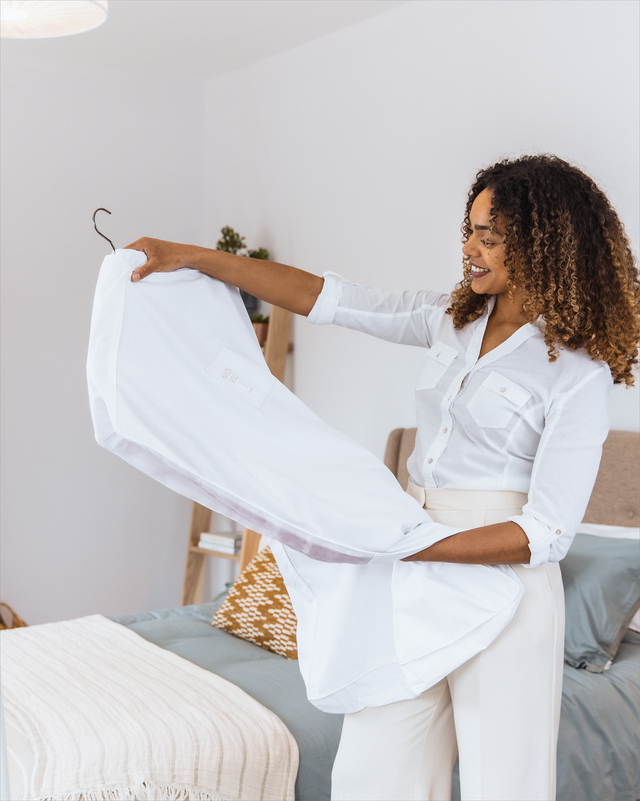
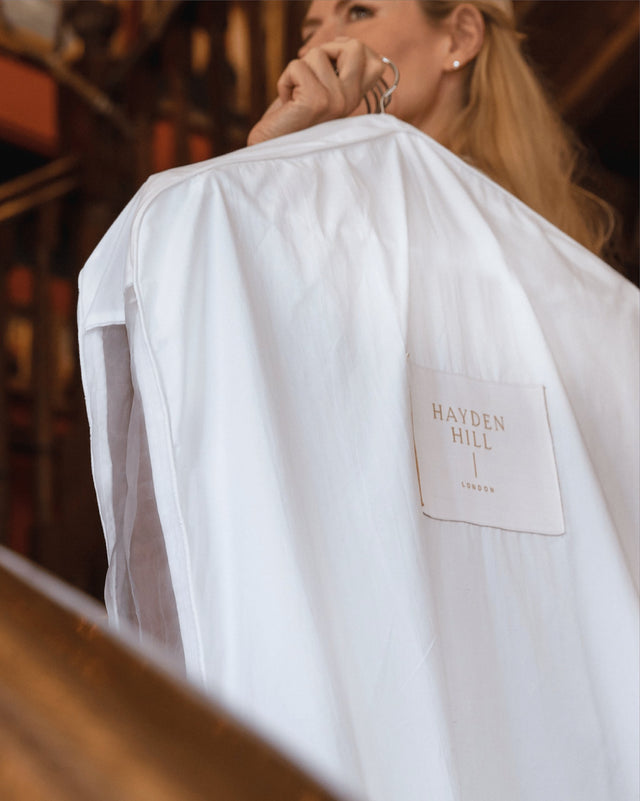
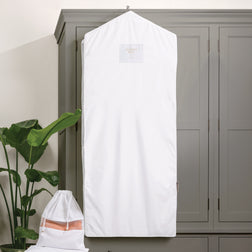
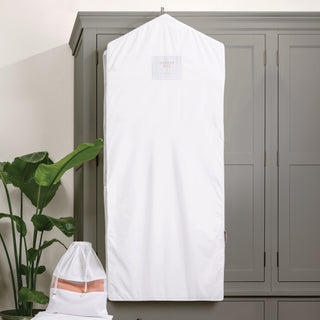
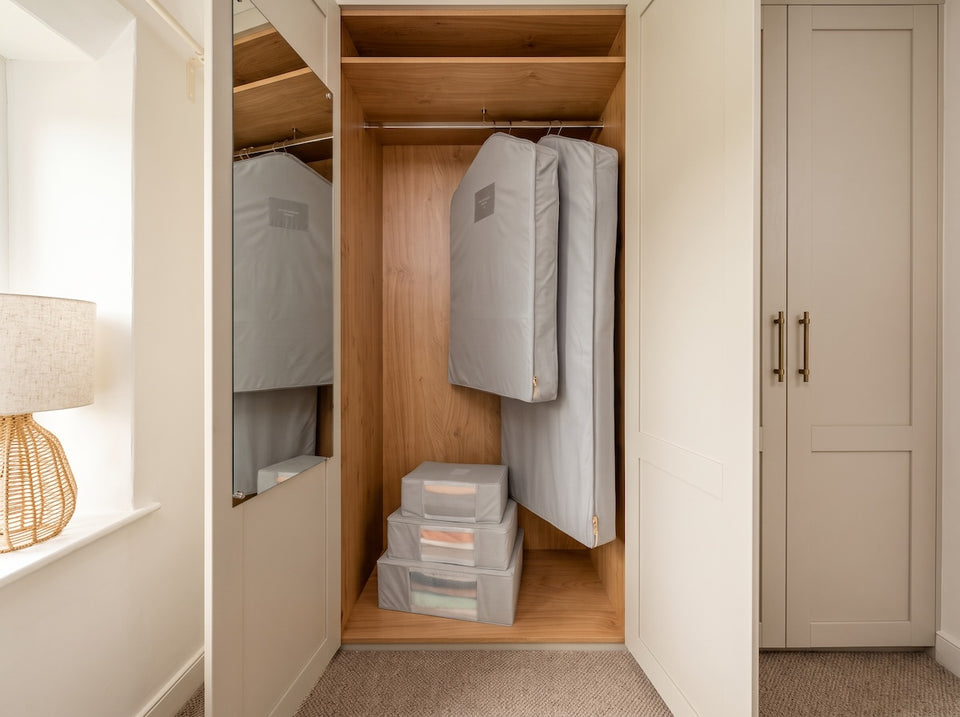
Protect tailoring with breathable coverage matched to garment length. Short hanging bags made of 100 percent organic cotton shield blazers, tailored tartan jackets, and folded trousers without crowding the hem. For sweeping maxi kilts, trench coats, and full-length woolen tartan overcoats, long hanging bags provide graceful, full-drop coverage, protecting hem pleats from gathering dust or brushing against the wardrobe floor.
Protecting Heritage Patterns from Clothes Moths
Clothes moth larvae (Tineola bisselliella) feed upon keratin, the structural protein in wool, cashmere, and alpaca. A single moth cluster can sever threads across an argyle panel or create holes in an archival tartan sett (the sett is the unique, repeating color and stripe pattern of a traditional tartan).
Cleanliness Before Storage
Moth larvae target garments carrying microscopic food remnants, including perspiration, skin oils, and dust. Even a garment worn only once carries traces that attract pests. Always steam or wash woolens thoroughly before seasonal storage.
The Value of Breathable Organic Cotton
Plastic containers trap humidity and increase the risk of fiber deterioration. Synthetic covers also emit chemical gases that yellow light-colored wool yarns over time.
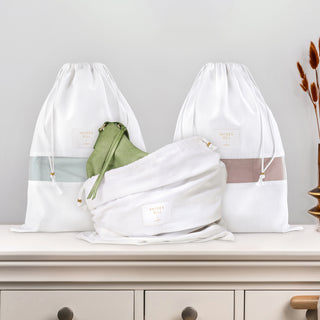
Cashmere and wool fibers require breathable storage to prevent moisture damage. Natural storage bags made from 100 percent organic cotton allow air circulation while establishing a physical barrier against moths, dust, and light exposure.
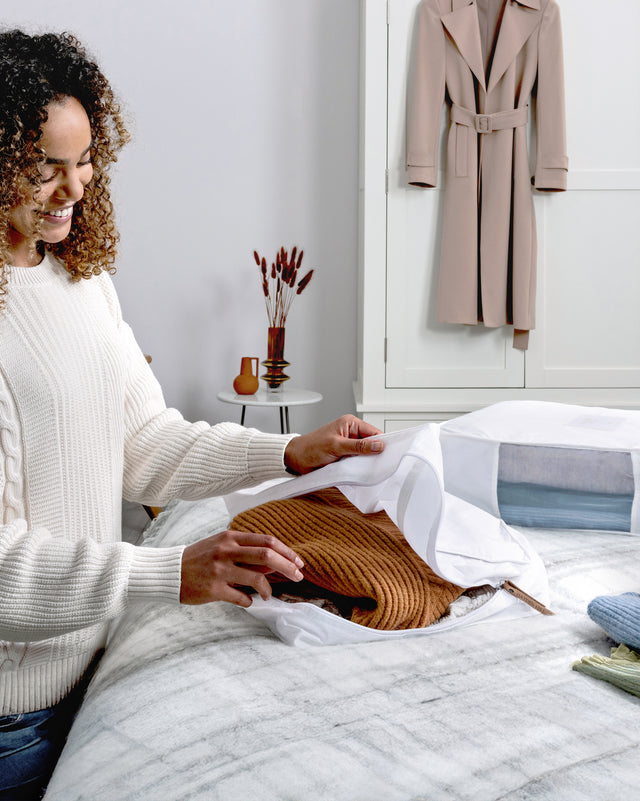
Store folded argyle woolens within breathable cotton sweater bags, avoiding tight stacks that compress the loft of the knit. For tailored tartan coats, blazers, and kilts, hanging bags made of natural organic cotton provide continuous protection throughout the off-season.
Frequently Asked Questions
How do you prevent multi-colored wool patterns from bleeding?
Wash garments in cool water using a gentle, pH-neutral wool detergent. Avoid soaking garments for extended periods, and never use warm water or harsh enzyme cleaners, which loosen dye bonds.
Can you wash argyle knits in a washing machine?
Dry cleaning or hand washing is recommended for argyle knits. Argyle patterns feature delicate intarsia joins where different color yarns meet; machine agitation loosens these connections and causes gaps along the pattern edges.
How should pleated tartan kilts and skirts be stored?
Store pleated tartan wool garments vertically using padded clamp hangers attached to the waistband. Enclose them in breathable organic cotton hanging garment bags to protect against dust and moths while allowing natural airflow.
Why shouldn't wool and cashmere be stored in plastic boxes?
Plastic containers seal in ambient humidity and create an insulated microclimate. Trapped moisture causes natural fibers to become brittle, encourages mildew growth, and can result in fabric discoloration.
Caring for What You Love
The enduring appeal of tartan and argyle reminds us that thoughtful craftsmanship remains worth preserving. These historic designs represent generations of weaving and knitting tradition, combining warmth with unmistakable character.
By embracing gentle cleaning habits, avoiding synthetic storage materials, and relying on breathable organic cotton protection, you extend the lifespan of your collection for decades of wear. Caring for what you wear honors the story behind every stitch.